Blog
Bucketing: How to use savings buckets for different goals
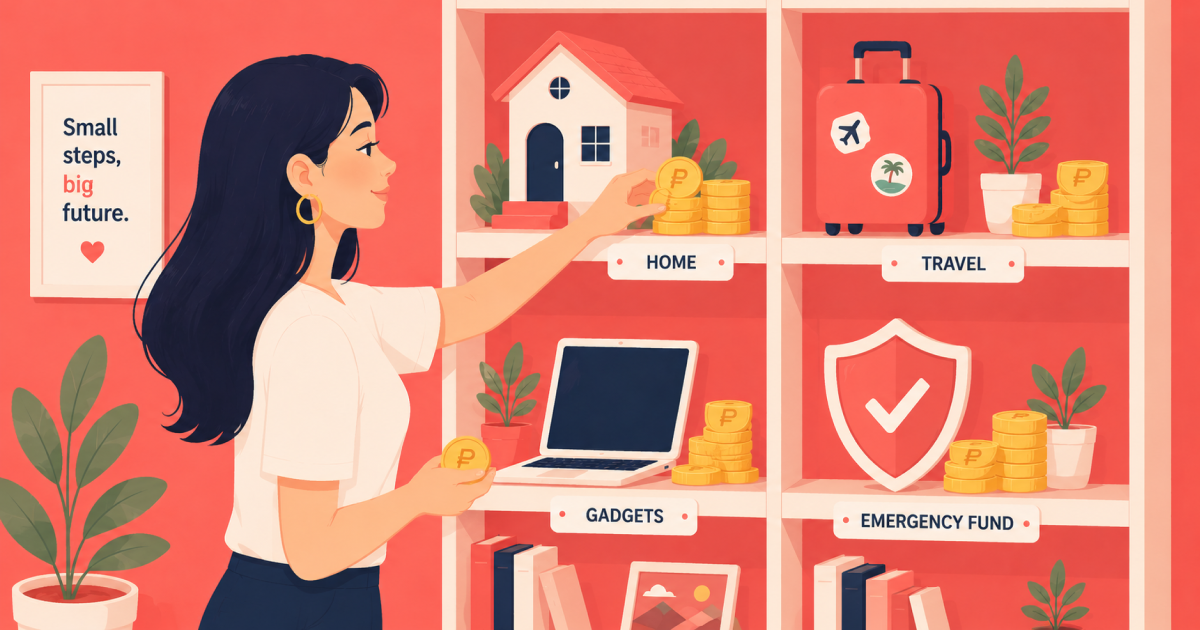
Saving can feel easier when your money has a clear purpose. If all your savings stay in one place, it can be hard to tell which amount is for emergencies, bills, school expenses, repairs, or a planned purchase. You may already be saving, but it can still be hard to know which money is for which need.
A simple way to make this easier is by bucketing. It is a money management method where you divide your savings into separate “buckets” based on your goals. Each bucket is meant for one thing, so it is easier to know what your money should be used for. You don't need to have a large amount saved before you start. Even a small amount can be easier to manage when you know what it is for.
What is bucketing?
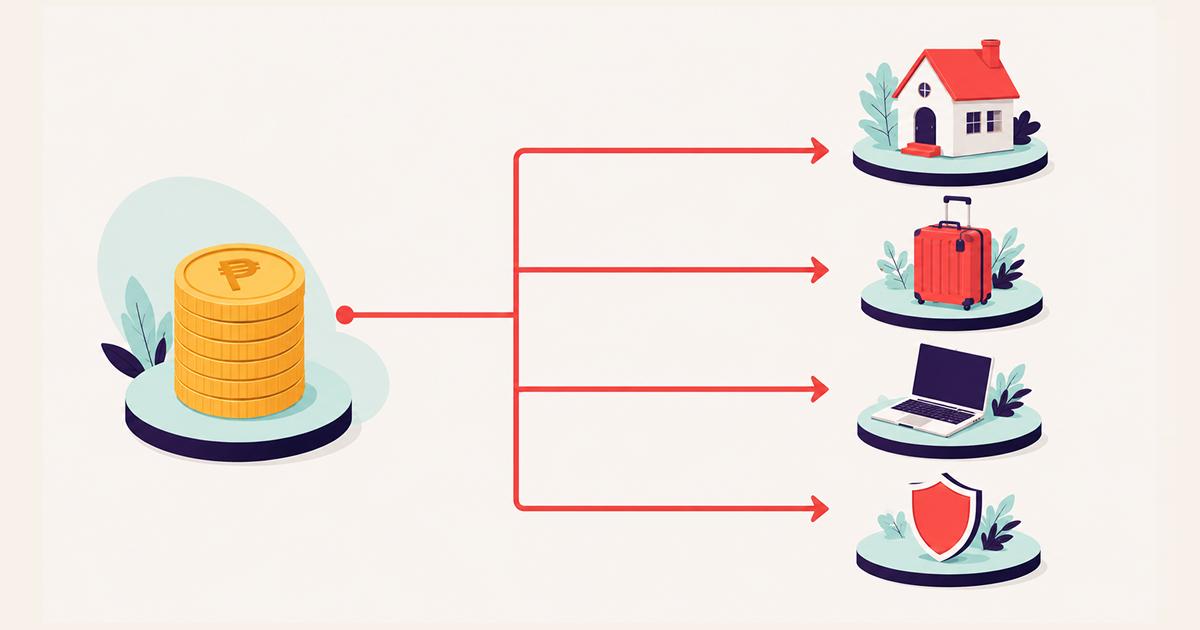
Bucketing means dividing your savings into separate groups based on their purpose. Instead of treating your savings as one general amount, you create smaller savings buckets for different needs.
For example, you may have one bucket for your emergency fund, one for yearly bills, one for school expenses, one for home repairs, and one for a family trip.
You can keep the money in separate e-wallet and bank accounts or sub-accounts, then track each bucket in a spreadsheet, notes app, or notebook. Choose the setup that is easiest for you to maintain. What matters is that you can track what each money bucket is for.
The simplest way to understand the meaning of bucketing is this: each part of your savings should have a clear use.
For example, if ₱1,000 is for your emergency fund, avoid using it for shopping or other unplanned expenses. If you have ₱500 dedicated for your child's school supplies, avoid spending it on other things before you actually need it.
You can adjust your buckets as your needs and priorities change. Giving each bucket a clear purpose can help you think twice before spending and make it easier to stay focused on your goals.
Why savings buckets work
Savings buckets work because they give each goal its own place in your budget. When all your savings are in one place, it can be hard to tell what you can spend and what should stay set aside.
With labels, you can see what is ready for emergencies, what is for bills, and which goal still needs more. This also helps you manage spending, because you are less likely to use money meant for something important.
How to start using savings buckets
You do not need to have a perfect budget to start. A simple plan for your income and regular expenses is enough.
Start with what you actually earn, what you usually spend, and the goals that matter most to you right now. You do not need to save a large amount immediately. Start with a habit you can keep every payday or every month.
1. List down your financial goals
Write down what you are saving for. Keep it specific.
Instead of writing save more, write build a ₱10,000 cash reserve, save ₱6,000 for travel, or prepare ₱12,000 for annual bills. Clear goals are easier to follow because you know what you are working toward.
2. Choose your first buckets
Start with only a few buckets. For many people, three to five buckets are enough to start.
Your first setup can include buckets for emergencies, bills and annual expenses, health or family needs, school or work needs, and one personal goal. This setup does not have to be perfect. It only needs to be simple enough for you to keep using. You can add more buckets later if you need them.
If you start with too many buckets, it may become hard to keep track of everything.
3. Decide how much goes into each bucket
You may also see the term fund allocation. It simply means deciding how much money goes into each bucket.
If you can save ₱2,000 this month, you might put ₱1,000 into your emergency fund, ₱500 into bills, ₱300 into health or family needs, and ₱200 into a personal goal.
You do not need to divide the money equally. Put more money into your most urgent goals first. You can adjust the amounts later when your income, expenses, or priorities change.
4. Schedule when you save
An automatic savings plan is easier to follow when it fits your payday schedule or any schedule you already use for bills. If you already follow a bill schedule, use that as a reminder to move money into your savings buckets too.
If your income changes every month, set a minimum amount first. For example, you can commit to saving ₱300 every payday, then add more when you have extra income. This helps you maintain a savings habit even for months when your budget gets tight.
Types of savings buckets you can start with
Your buckets should match your life situation, not someone else’s budget. To make it easier to start, here are a few savings bucket categories you may need to plan for.
1. Emergency fund
Your emergency fund is for urgent costs that cannot wait. This may include medical expenses, sudden repairs, job loss, or family needs that are not part of your regular budget.
Keep this money separate from everyday spending. It should be easy to access when you need it, but not so easy to use that it becomes money for everyday expenses. Start small if that is what your budget allows. A small cash reserve is still better than having none at all.
2. Bills and annual expenses
Some of your expenses may not come every month, but they still come regularly. These may include school enrollment, insurance renewals, check-ups, vehicle registration, gifts, or holiday spending.
Use this bucket to prepare before the due date. If you need ₱12,000 in 6 months, you can set aside ₱2,000 per month. When the bill arrives, the money you need is already there.
3. School or family needs
Many expenses are not emergencies, but they still matter. These may include school supplies, uniforms, work tools, internet costs, medicines, or support for family members.
When you keep these costs separate, your budget can be easier to manage. It also helps you avoid using your emergency fund for costs that you can prepare for.
4. Home repairs and replacements
Appliances, plumbing, roof repairs, and small home improvements can cost a lot when they happen all at once. You can use a home repairs bucket to prepare little by little. You can also use this bucket for replacements you already expect, such as a new electric fan, phone, laptop, or kitchen appliance.
5. Personal or lifestyle goals
Saving should not only be for essentials or urgent problems. You can also create a bucket for something you want, such as travel, celebration, or a personal reward. This helps you plan for wants without taking money from needs like bills, medicines, or school expenses. It also gives you time to decide if the purchase still matters to you.
Examples of how to divide your savings
The right amount is different for every household, so treat these examples of savings as starting points. Use the structure, not the exact amounts. Your own plan should match your income, expenses, dependents, debts, and priorities.
For example, here is one way someone with a family might divide ₱5,000 in monthly savings:
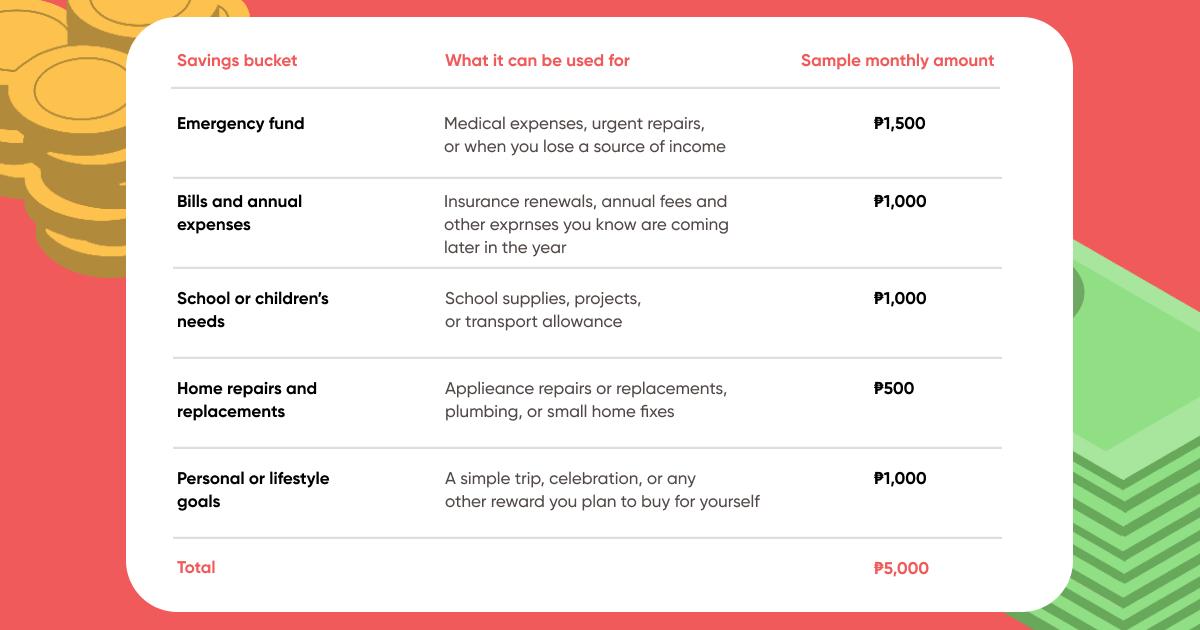
This is only a sample. You can adjust the buckets and amounts based on your own income, family size, debts, and priorities.
Why it’s important to review your savings buckets
Your bucket system works better when you review it regularly. Your goals will change. Your income may change. But some expenses may become more urgent than others.
Check your buckets at least once a month. If your budget is tight, check them every payday. Ask yourself which bucket needs more money, which goal can wait, and whether you used money from one bucket for something else. You can also check if your monthly amount still fits your current budget.
What to do as your savings grow
Once your buckets start growing, the next important thing to remember is where to keep your money.
Make your emergency fund easy to access when you need it. For goals that are still months or years away, check your timeline first. Money for next month’s bills should stay easy to reach, while money for later goals may give you more time to compare options.
If you’re wondering what to do with savings you do not need to use soon, look at deposit options based on your goal, timeline, and how soon you may need to withdraw the money. Before deciding, check the current terms, fees, taxes, withdrawal rules, and account requirements.
Build your extra money further
If you've set aside enough funds for later, Salmon Time Deposit lets you start with as little as ₱5,000 and choose a term that fits your goals. Open a Time Deposit account
What can make savings buckets harder to track
Savings buckets work best when your setup stays simple and easy to track. Watch out for these common issues:
1. Creating too many buckets
If your savings are spread across too many buckets, you may end up tracking money you do not really need yet. Keep only the most important ones at first: emergencies, bills, and 1 or 2 personal goals. Add more only when you can track them easily.
2. Setting a target that is too high
Your savings target should help you move forward without making your daily budget hard to follow. If you keep missing your target, lower it. It’s better to save ₱500 every payday consistently than plan for ₱3,000 and stop after one month.
3. Using your emergency fund for regular spending
Your emergency fund should be ready for urgent expenses. If you often use it for regular spending or your wants, you may need to make separate buckets for them instead.
4. Not tracking your progress
Buckets work best when you can see them. Use a tracker that feels easy for you, whether that’s an Excel spreadsheet, a notes app, notebook, or separate bank or e-wallet accounts if available. It does not need to be perfect. It just needs to be simple enough for you to understand how much you have saved for your specific goals.
Frequently asked questions (FAQ)
How many savings buckets should I have?
You can start with 3 to 5 buckets. Your first setup can include buckets for emergencies, bills, short-term goals, longer-term savings, and personal goals. Add more only if you can track them easily.
Can I start with a small amount of money?
Yes, even a small amount like ₱100 or ₱500 can help you build the habit of saving. You can always increase it later when your budget allows.
Can I use one account for all my buckets?
Yes, one account can work as long as you can track the amounts clearly. You can use a spreadsheet, notes app, or notebook to separate your buckets on paper. Separate or sub-accounts can help, but they aren’t required.
What if my income changes every month?
You can set a minimum amount for months when money is tight, then add more when your income is higher. This makes your automatic savings plan easier to follow, even when your income changes.
What is the first bucket I should build?
Start with an emergency fund if you do not have one yet. Keep it as your first bucket, so you have a buffer for urgent costs without using money meant for your other goals. Aiming for 3 to 6 months of essential expenses is a good long-term target, but you can start with your first ₱5,000, ₱10,000, or one month of expenses and build from there.
How often should I update my buckets?
You can review them once a month or every payday, whichever is easier for you to remember. Update the amounts in your savings buckets when your income, expenses, or priorities change.
21.06.2026