Blog
Online Investment Apps: Beginner Guide to Choosing a Legit Platform
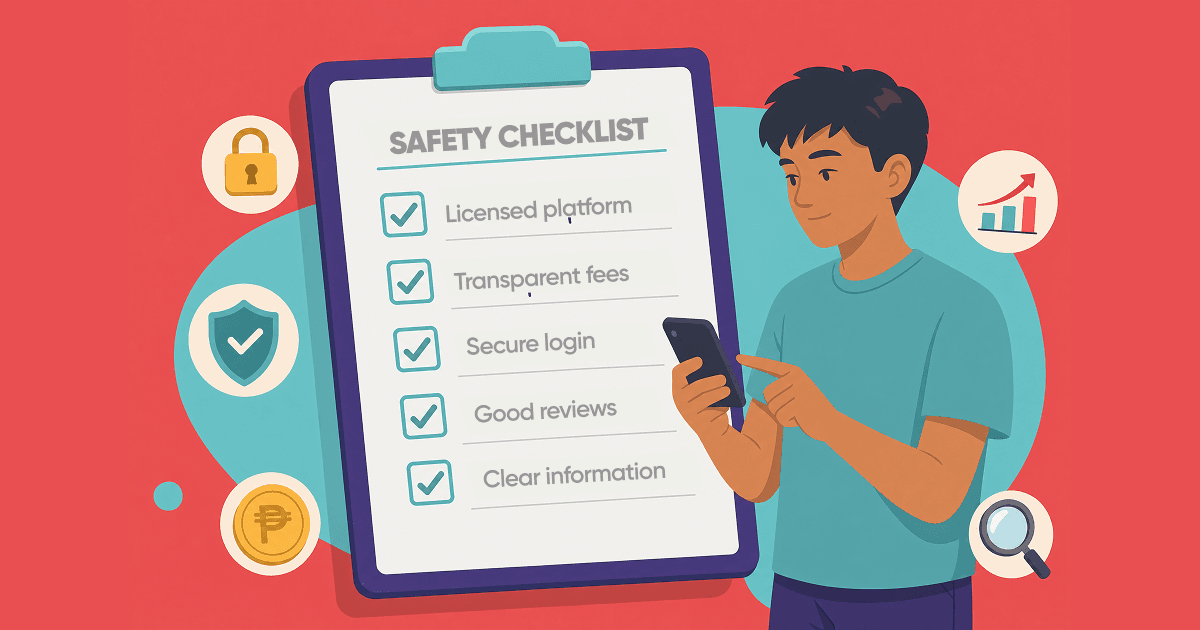
Online investment apps have made investing easier to access. You can open an account, add money, check prices, and manage investments from your phone. For many Filipinos, this feels more practical than visiting an office or calling a broker.
But just because an app is convenient doesn't automatically mean it is safe to use. A clean design, a familiar logo, or a popular social media page does not prove that an investment app is legitimate. Before you send money to any online investment platform, look for the company’s legal name, the product being offered, the fees you may pay, and how you can withdraw your money.
This article is for general information only. It is not investment advice.
What to know first
Online investment apps are apps or websites that let you add money and buy or manage investments. Some focus on stocks. Others offer funds, bonds, investments outside the Philippines, products linked to crypto, or different types of investments in one place.
If you have searched for “investment apps Philippines,” “investing apps Philippines,” or “legit investment apps Philippines,” you are probably trying to answer one basic question: which app can you trust? A better first step is to look for the company behind the app, read the fees, and check whether the product fits your goal and risk level.
If an offer promises fast, high, or guaranteed returns, treat that as a warning sign.
What are online investment apps?
An online investment app is an app or website that helps you invest or manage investments from a phone or computer. Depending on the app, you may be able to verify your identity, deposit money, choose an investment, confirm a transaction, and monitor your balance.
The app is only one part of the decision. What matters more is the company behind it, the product being offered, and the rules that apply. A stockbroker app is different from a managed fund platform or a platform that offers products linked to crypto. Each one has its own risks, fees, and withdrawal rules.
If you are just starting, do not choose an app only because it looks easy to use. Choose one that also makes the company, product, fees, and risks clear.
How online investment apps work
Most investment apps follow a similar process. You create an account, submit details to verify your identity, add money, choose what to invest in, then confirm the transaction. If you are using a stock trading app, this may mean placing a buy or sell order.
Before you put in money, make sure you understand what you are buying, how it may grow, what can make it lose value, and how you can withdraw.
Common types of investment apps and platforms
Stock trading apps
A stock trading app lets you buy and sell shares listed on a stock exchange. In the Philippines, this usually means opening an account with a stockbroker or online broker accredited by the Philippine Stock Exchange (PSE).
Some people call these stock apps or stock market apps. They can be useful, but they can also tempt beginners to buy and sell too often when prices move quickly. If you are comparing results for “best stock trading app” or “best stock market app,” check whether the company is legitimate before comparing features.
Online trading apps
Online trading apps usually focus on more active buying and selling. They may include price charts, watchlists, alerts, order types, and market data.
If you are just starting, you do not need every feature right away. A clear investing app with simple instructions is often more useful than a platform full of tools you do not yet understand.
Searches like “best trading app Philippines,” “trading apps Philippines,” or “legit trading app in the Philippines” can give you ideas. Still, do not choose based on search results alone.
Multi-asset investment platforms
Some online investment platforms offer different types of investments in one place, such as stocks, funds, bonds, investments outside the Philippines, or products linked to crypto.
That convenience can be useful, but it can also be overwhelming if you are new to investing. A low-risk fund and an investment whose price can move sharply should not be treated the same way just because they appear inside the same app.
If a new investment platform offers many products, open the product details and check the risk, fees, and withdrawal rules for each one.
What beginners should check before using an app
Regulation and legitimacy
Start with the legal company name. It should appear in the app, website, terms, or official support pages. Do not rely only on the brand name, app name, or social media page.
Check whether the company is registered, licensed, regulated, or accredited for the product it offers. For Philippine stocks, look for PSE-accredited trading participants or online brokers. For banks and certain financial institutions, check with the Bangko Sentral ng Pilipinas (BSP). For securities, investment companies, and similar products, check the relevant regulator.
The BSP Verifier can help you check whether a financial institution is registered with or supervised by the BSP. A BSP listing can help you verify the company, but it does not make the product automatically safe. If you do not find it there, do not assume right away that it is a scam, because another regulator may supervise it.
If you are looking for a legit investment app, do not stop at the app name. A legitimate app should make these easy to find: the company name, regulator, product details, fees, and official ways to contact support.
Fees, minimum deposits, and withdrawals
Look at the full cost before signing up. Fees may include trading commission, platform fees, cash-in fees, withdrawal fees, fund management fees, taxes, foreign exchange charges, and inactivity charges.
“Free to open” does not always mean free to use. Also look at the minimum amount needed to start, where withdrawals go, how long they may take, and whether a withdrawal fee applies. If adding money is easy but taking it out is unclear, pause before adding more money.
Available assets and risk level
Choose an app based on your goal, not only on what is popular. If the money is for rent, tuition, bills, groceries, loan payments, or emergencies, do not usually put it in high-risk investments. You may need that money soon, and your investment can lose value.
For long-term goals, you may have more room to take risk. But before investing, ask: What am I buying? What can make its value go up? What can make it lose value? When can I withdraw?
App security and ease of use
A good app should make it easier for you to protect your account. Look for secure login, strong password rules, device verification, account alerts, and official ways to contact support.
You should also be able to find product details, fees, transaction history, account balance, and withdrawal instructions without guessing.
For beginners, a clear app with fees you can easily see and support you can contact is often better than a complicated app with advanced tools you do not need yet.
Grow savings you are not ready to invest yet. Set aside money in Salmon Time Deposit and earn up to 6,5% p.a. with flexible terms from 6 months to 5 years. Open an account
Investment apps in the Philippines: what to keep in mind
There is no single list of investment apps in the Philippines that works for everyone. Your choice depends on what you want to invest in.
Some examples you may come across include PSE-accredited online brokers such as BDO Securities, BPI Securities, COL Financial, DragonFi, First Metro Securities, and Philstocks for Philippine stocks. For managed funds, you may also see app-based options such as GCash's GFunds. For international markets, Interactive Brokers lists the Philippines among its available countries and territories.
These are examples only, not recommendations. Before opening an account, check the company’s legal name, regulator, fees, account requirements, available products, risks, and withdrawal rules.
If you want to invest in Philippine stocks, start with PSE-accredited stockbrokers or online brokers. PSE says stock market transactions are done through PSE-accredited stock brokerage firms or trading participants. It also advises investors to compare minimum investment, services, commissions and fees, client feedback, and how easy the platform is to use before choosing one.
If you are looking at a bank deposit product, check whether the bank is regulated by the BSP. A deposit product can help with savings, but it is not the same as a stock, fund, or trading app.
If the app offers funds, securities, or investment products, check the company’s registration, license, product documents, and regulator. For services linked to crypto, be extra careful. Do not treat screenshots, group chats, influencer posts, or social media popularity as proof that a platform is legitimate.
Build a savings base before taking investment risk
Before you start investing, it helps to separate money you can afford to put at risk from money you may need soon. This includes money for emergencies, expected expenses, and goals where you cannot afford sudden losses.
For money you do not want to expose to risk in the market, a deposit product may be a better fit than an investing app.
Investment app vs trading app: what is the difference?
An investment app is a broad term. It may help you buy funds, hold deposit products, invest in stocks, or manage investments over time.
A trading app usually focuses more on buying and selling assets. It may include charts, market prices, and tools you may use to decide when to buy or sell.
A simple way to think about it is this: you usually invest with a goal and timeline in mind, while trading focuses more on price movements and timing. Both carry risk, but trading usually asks you to make decisions more often.
The right app is not always the one with the loudest ads or the most features. It is the one that fits your goal, risk level, budget, and experience.
Common mistakes beginners should avoid
Investing money meant for emergencies
Do not invest money you need for basic expenses, debt payments, or emergencies. Your investment can lose value, and you may not be able to withdraw at the right time or price.
Trusting promises of fast or guaranteed returns
Be careful with promises of fast, high, or guaranteed returns. BSP lists Ponzi scams as schemes that offer unrealistic returns in a short period of time and use money from new investors to pay earlier investors.
A real investment carries risk. If someone says there is no risk, no loss, or a sure payout, treat it as a warning sign.
Signing up through unofficial links
Use official websites, official app stores, and verified company pages. Avoid links from strangers, group chats, comments, or private messages.
Copying advice from strangers online
You can get ideas from online discussions, but do not copy someone’s choice without checking if it fits your budget, timeline, and how much risk you can take. A person online may also be promoting a platform for their own benefit.
How to choose an investment app that fits your goals
Start with your purpose, timeline, and how much risk you can take. Money needed in the next few months should be treated differently from money you can leave invested for years. Choose a product and platform you can understand and manage.
Before you open an account, ask yourself:
Can you clearly identify the company’s legal name?
Is the company registered, regulated, licensed, or accredited for the product offered?
Can you easily find and understand the fees?
Is the minimum investment within your budget?
Do you know where your money will go when you withdraw, how long it may take, and what fee may apply?
Does the app explain the risks?
Can you contact support through official channels?
Can you start with an amount you can afford to keep invested while learning?
You may also see lists of “best investment apps for beginners,” “best investing apps,” or “best investment app for beginners.” Use those lists as a starting point, not the reason you choose an app. If you cannot understand how the product works, pause, read the product details again, or start with a smaller amount.
Set aside money you want to grow. Open a Salmon Time Deposit with a minimum initial deposit of ₱5,000 through Salmon Bank (Rural Bank) Inc. Learn more
Frequently asked questions (FAQs)
Are online investment apps safe to use?
Yes, some online investment apps can be safe to use, but safety depends on the company, product, regulator, app security, and how you protect your money and account. Always verify the company and product before sending money.
What is the best investment app for me as a beginner?
There is no single best investment app for every beginner. A good beginner choice should be legitimate, easy to understand, show fees clearly, and suit your goal.
Can I use a stock trading app as a beginner?
Yes, but you should learn the basics first. For Philippine stocks, start with a PSE-accredited stockbroker or online broker.
What is the difference between an investment app and an online trading app?
An investment app can cover many products and long-term money goals. An online trading app usually focuses more on buying and selling assets.
Where can I invest in stocks as a beginner?
If you are asking where to invest in stocks in the Philippines, start with PSE-accredited stockbrokers or online brokers. Compare minimum investment, fees, services, platform features, and customer support before opening an account.
05.07.2026