Blog
Barangay Certificate and Clearance: Requirements & Process

What is a barangay certificate or clearance?
Getting things done in the Philippines often starts at your barangay. Many transactions need a barangay clearance or a barangay certificate. Knowing the barangay clearance purposes and the difference between the two can save you time. This guide covers what each document is, when you need it, and how to get it.
What is a barangay clearance?
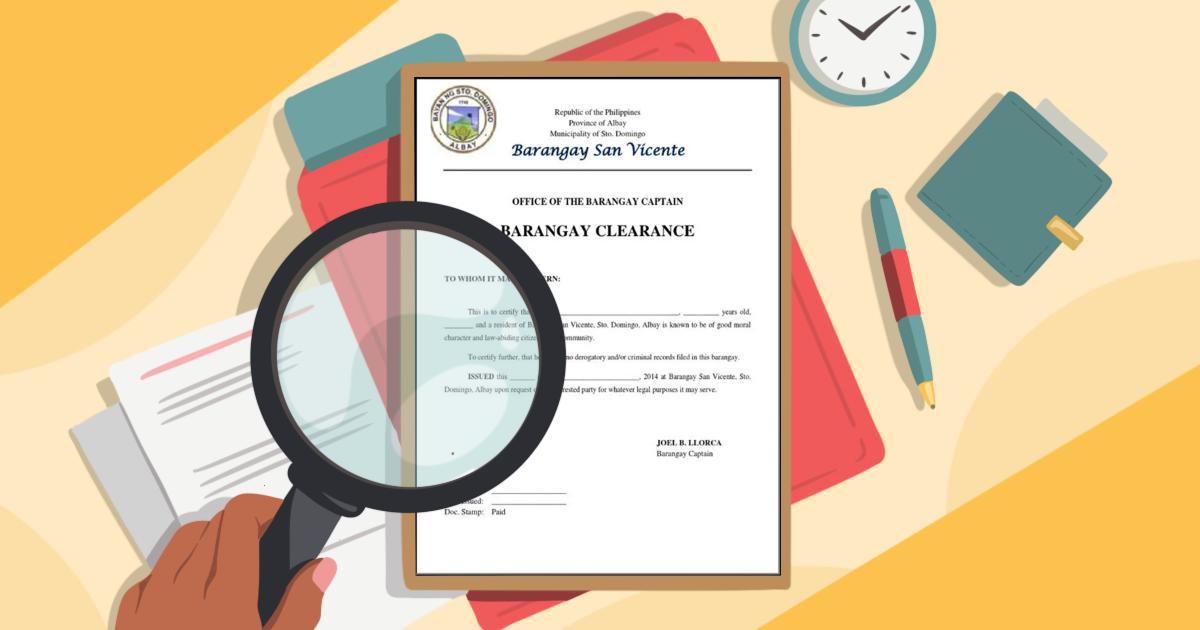
A barangay clearance is an official document from your local barangay. It confirms that you live there and have no bad records in the community.
The barangay captain (punong barangay) or an authorized representative signs the document. It covers your local community record only. It is separate from your NBI or police clearance.
Common uses of barangay clearance
Barangay clearance is needed in more situations than most people expect. Here are the most common uses:
Employment: Getting a barangay clearance for employment is highly common, as many employers ask for it as part of pre-employment screening to confirm if you have a clean community record.
Loan applications: Banks often ask for it when you apply for a personal or housing loan. It helps verify your identity and address.
Business permits: It is usually required for a barangay business permit or mayor's permit.
What is a barangay certificate?
A barangay certificate, also called a barangay certification, is issued by the barangay. It confirms a specific fact about you, such as your address or financial status.
The most common types include:
Certificate of residency: Confirms your address within the barangay
Certificate of good moral character: States that you have no bad records
Certificate of indigency: Confirms that you are financially disadvantaged. Often required for government aid or scholarships.
Barangay certificate of residency
The barangay certificate of residency confirms that you live at a specific address. It is signed and sealed by the barangay captain or an authorized official. This document is often needed when:
You apply for a government-issued ID and need to verify your home address
A bank or lender needs proof of address for a loan or account application
Barangay certificate vs barangay clearance
People often confuse these two documents. They sound similar, but they serve different purposes. Here is a quick comparison:
| Barangay clearance | Barangay certificate |
What it confirms | No derogatory records. You are in good standing. | A specific fact about you. Examples: residency, indigency, good character. |
Primary purpose | Character and community standing | Confirms a specific factabout you |
Typically used for | Employment, police clearance, business permits, loan applications | Proof of address, scholarships, government assistance |
Who needs it | Anyone with formal transactions needing a community background check | Anyone who needs to confirm a specific personal fact officially |
To make it simple: a barangay clearance clears you. It confirms you have a clean record. A barangay certificate certifies a specific fact about you. Not sure which one you need? Ask the institution or office requesting the document.
Requirements for barangay clearance
Knowing how to get barangay clearance starts with having the right documents. Requirements may vary per barangay, but here are the standard ones:
Valid government-issued ID: This is the most important requirement. Accepted IDs: Philippine National ID, passport, driver's license, UMID, PhilHealth ID, voter's ID, or Postal ID. Your ID should show your address in the barangay.
Community Tax Certificate (cedula): Almost always required before the barangay issues your clearance. Get one at your barangay hall, or city or municipal hall. The cedula costs ₱5 as a base tax, plus ₱1 for every ₱1,000 of income you earned in the previous year. If you had no income, you only pay the ₱5 base amount. The cedula is valid for the calendar year it was issued. Barangays typically require a current-year cedula when processing your clearance.
Accomplished application form: The barangay office provides this. Fill it out and state the purpose of your request.
Passport-sized photo (1–2 copies): Some barangays require recent 2x2 photos. Check with your barangay first.
Barangay clearance fee: The amount varies per barangay. See the fee section below for details.
Requirements for a barangay certificate
Here are the usual requirements for a barangay certificate:
Valid government-issued ID: Bring at least one ID with your name and address. A driver's license, passport, voter's ID, or UMID are all accepted.
Proof of residency: A recent utility bill, lease agreement, or official mail. It should show your address in the barangay.
Accomplished request form: Available at the barangay hall. Fill in your details and state the type of certificate you need.
Barangay certificate fee: Fees vary per barangay but are generally very low.
How to get a barangay certificate or clearance
The process is the same for both documents. Here is what to do:
Prepare your requirements: Bring your valid ID, proof of residency, and cedula. Check with your barangay if additional documents are needed.
Visit your barangay hall: Go to your local barangay hall in person.
Request and fill out the form: Ask the desk officer for the right form. Fill it out completely. State the purpose of your request.
Pay the fee and claim your document: Pay at the treasurer’s window and ask for an official receipt. Once signed by the barangay captain or their representative, your document is ready — usually on the same day.
Where to get a barangay certificate or clearance
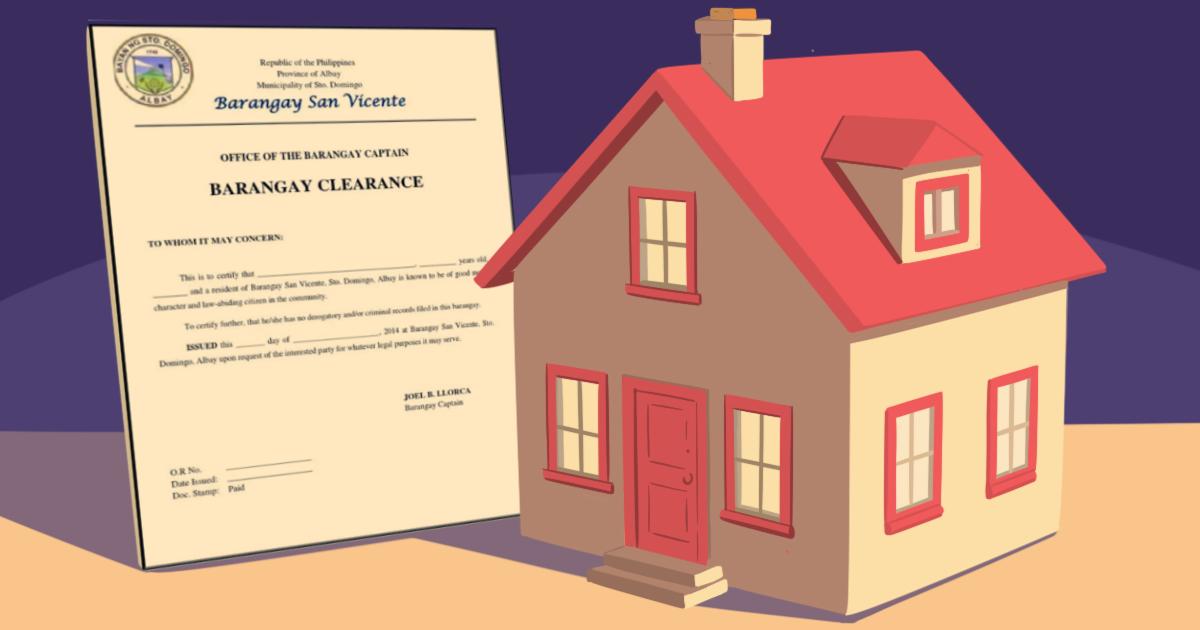
You can only get these documents from the barangay hall in the barangay where you live. If you recently moved, visit the barangay hall of your new address. Take note that you cannot avail a barangay certificate or clearance from a neighboring barangay.
Barangay clearance fees and processing time
The barangay clearance fee depends on your barangay and the reason for your request.
For personal use (employment, ID, general purposes): Fees usually range from ₱20 to ₱100, though the exact amount depends on local ordinance and may vary per barangay.
For business purposes: Fees are higher and depend on local ordinance in your barangay or municipality
Most barangays process certificates and clearance documents on the same day. It usually takes 30 minutes to a few hours if your documents are complete.
First-time jobseekers may get their barangay clearance for free under Republic Act 11261 (First Time Jobseekers Assistance Act). Ask your barangay hall if you qualify.
Can I apply for a barangay clearance online?
Getting a barangay clearance online is not yet available in most areas. Some barangays in Metro Manila and other major cities offer online forms or booking, but most still need you to visit in person.
A personal visit is usually required because:
Barangay staff need to verify your identity and address in person
Your signature and thumbprint are collected on-site
The document needs a physical signature and official barangay seal
Why barangay clearance is important
The importance of barangay clearance goes beyond just showing proof of residency. Employers ask for it before hiring. Government offices need it for permits. Banks may require it for loans and other transactions.
It can also help you get a government-issued ID. A Barangay Certificate of Residency is one of the accepted proofs of address when applying for a Postal ID. If you do not yet have a primary government ID, a barangay clearance can also support a UMID application as a secondary supporting document. Both the Postal ID and UMID are valid IDs accepted by Salmon, so your barangay clearance or certificate can be a helpful first step toward your application.
Explore Salmon loans. Ready to take the next step? Discover accessible loans, credit, and deposit products from Salmon. Explore what we offer at Salmon
Frequently asked questions (FAQs)
How long is a barangay clearance and certificate valid?
A barangay clearance is usually valid for six months to one year, depending on the issuing barangay and your purpose. Many institutions prefer one issued within the last three to six months. Some barangays print the expiry date directly on the document. If yours does not, count from the issue date.
Can I use a barangay clearance as a valid ID?
No, a barangay clearance is not a primary government-issued ID. For most transactions, pair it with a passport, driver’s license, or UMID. A barangay or brgy clearance is best used for what it is: confirming your good standing in the community.
Can a barangay certificate be used for bank applications?
Yes, a barangay certificate of residency is often accepted as proof of address. Banks may require it when you open an account or apply for a loan. Check barangay clearance for bank requirements with your bank, as the list of accepted documents may vary per bank.
Can foreigners apply for a barangay certificate in the Philippines?
Yes, foreigners can apply. Those with valid visas, working permits, or permanent resident status may get a barangay certificate of residency to confirm their barangay residency. Bring a valid ID and proof of address (such as a lease agreement or utility bill) to your local barangay hall.
Do I need to renew my barangay clearance every year?
Yes, you generally need to renew it. The standard barangay clearance requirement is valid for six months to one year. In practice, renew it when you need it for a job application, loan, or other transaction. The steps are the same as your original application.
19.04.2026